
Field Strip vs Deep Clean: What’s the Difference?
Read enough cleaning guides and two phrases start to blur together: field strip and deep clean. Some writers use them interchangeably. Manufacturers do not. The owner’s manual for your pistol draws a very specific line between the teardown it expects after a range trip and the teardown it would rather you did not attempt at the kitchen table. That line matters — both for how well your gun runs and for how long it lasts. Here is what each level actually means, what it covers, and a schedule that keeps a firearm honest without turning every cleaning session into a three-hour project.
Field strip: the teardown manufacturers expect
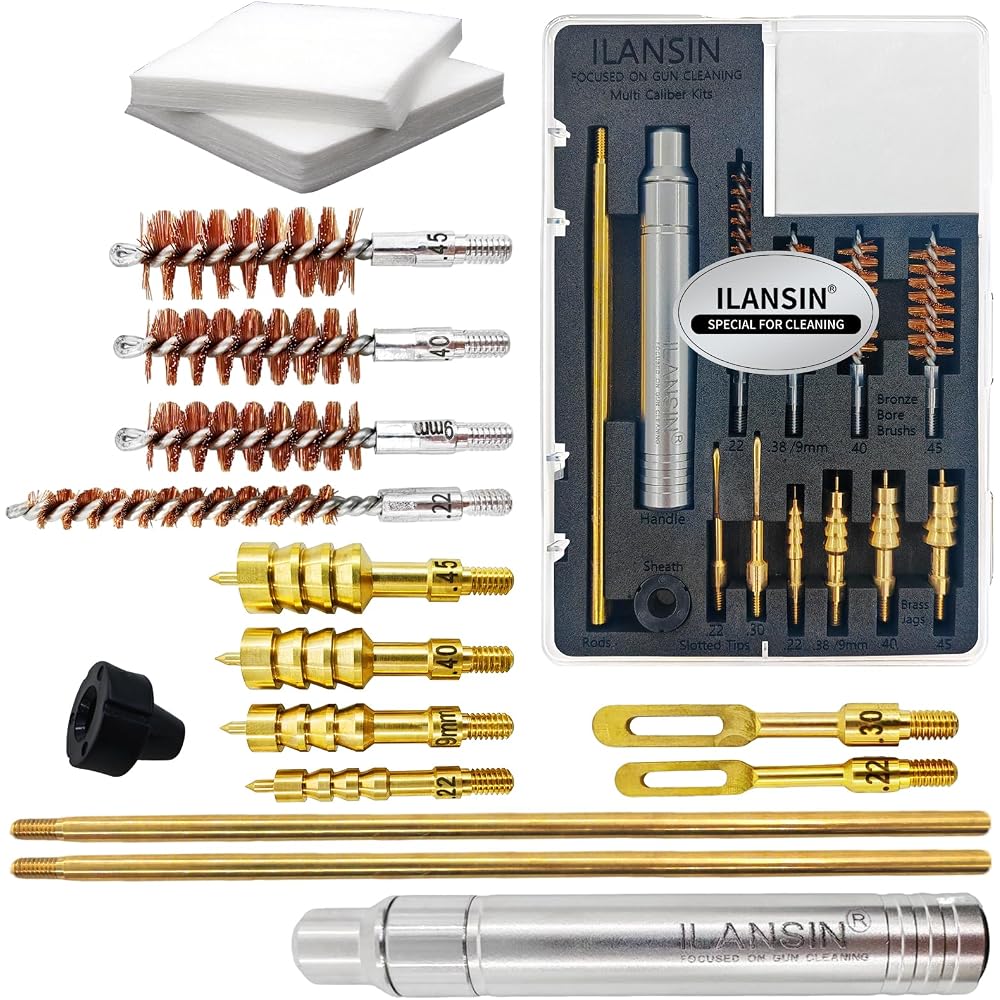
A caliber-marked pistol kit covers everything a field-strip clean needs: brush, jags, patches and oil in one box.
Field stripping means taking the firearm down to its major assemblies only. On a semi-automatic pistol that is four parts: the frame, the slide, the barrel and the recoil spring assembly. No punches, no pins, no springs flying across the room — the point is that routine cleaning needs nothing more than what the manual walks you through.
Manufacturers are unusually blunt about where the line sits. As the Ruger SR1911 instruction manual warns in capital letters: "Never disassemble your handgun beyond the field stripping process outlined in this manual." And the SIG SAUER P220-series manual puts it plainly: "Field stripping is quite sufficient to allow cleaning after shooting. Further dismantling is a job for qualified gunsmiths and armorers only."
Two practical notes before you start. First, most striker-fired pistols (GLOCK being the famous example) require a trigger pull to release the slide — so the unload-and-verify routine before takedown is not optional ceremony; it is the single most important step of the whole session. Second, keep the work surface covered. A non-slip cleaning mat protects both the finish on the bench and the small parts that like to roll away.
What a field-strip clean actually covers
Done properly, a field-strip session reaches every surface that fired ammunition actually touches:
- Bore and chamber — wet brush from the chamber end, then patches until they come out clean. Never scrub from the muzzle.
- Breech face and extractor — the dirtiest spot on any semi-auto; a nylon brush and a cotton swab clear the carbon ring.
- Slide rails and frame contact points — wipe, brush, then a thin film of lubricant where metal slides on metal.
- Recoil spring assembly — wipe it down and eyeball it for kinks while it is out.
How often is "routine"? GLOCK’s own care guidance, as summarized by Wing Tactical, lists four moments: when the pistol is new and unfired, after every firing, once a month even if it sits unused, and after exposure to water, dirt or dust. SIG SAUER’s P320 manual sets a round count — clean and lubricate after roughly every 500 rounds. One more point the manuals repeat: more oil is not better. GLOCK specifically cautions that excessive lubrication can adversely affect function, because surplus oil turns into a paste with powder residue. A needle-oiler CLP bottle makes it easy to apply one drop where it belongs instead of flooding the action.
Deep clean: what it means and who should do it
"Deep clean" gets used for two different jobs, and it is worth separating them.
Detail stripping is the version that goes beyond the manual: removing the striker or firing-pin channel, the trigger group, the extractor, the magazine guts. This is where the manuals plant their warning flags. SIG SAUER’s current operator’s manual instructs that any maintenance beyond the user-level steps be performed by a certified SIG SAUER armorer, and Ruger’s P-series manuals add that further disassembly of slide or frame components is not recommended and should only be undertaken by the factory. Springs under tension, small parts with orientation requirements, and a carry gun you bet your life on — the manufacturers are right to be conservative. If a pistol needs detail work, an armorer’s bench is the right place for it.
Bench-level deep cleaning is the version owners can safely do within the field-strip boundary: spent brass scoured off the barrel hood and feed ramp, a deeper bore session after heavy fouling, magazines emptied and wiped (the manuals do allow magazine disassembly for cleaning), exterior wiped down, and lubricant refreshed to the manual’s points. On a range gun this earns its keep roughly every 1,000–3,000 rounds; on a daily-carry pistol, once a year is a sensible floor, because holster lint and sweat collect even when the gun is never fired.
Field strip vs deep clean at a glance
| Field-strip clean | Deep clean | |
|---|---|---|
| Disassembly | Major assemblies only | Bench-level detailed; internals = armorer |
| Time | 15–20 minutes | 45–90 minutes |
| When due | After every range trip; monthly for carry | Every 1,000–3,000 rounds or yearly |
| Kit needed | Caliber kit + patches + CLP | Above + swabs, cloths, patience |
| Risk if skipped | Stovepipes, friction wear, corrosion | Carbon rings, heavy fouling, lint jams |
The honest summary: most guns that "need a deep clean" just need a field-strip clean done thoroughly, on schedule. Walk through a complete pistol session step by step in our 9mm cleaning guide, or see the same teardown applied to a striker-fired pistol in the Glock 19 step-by-step guide.
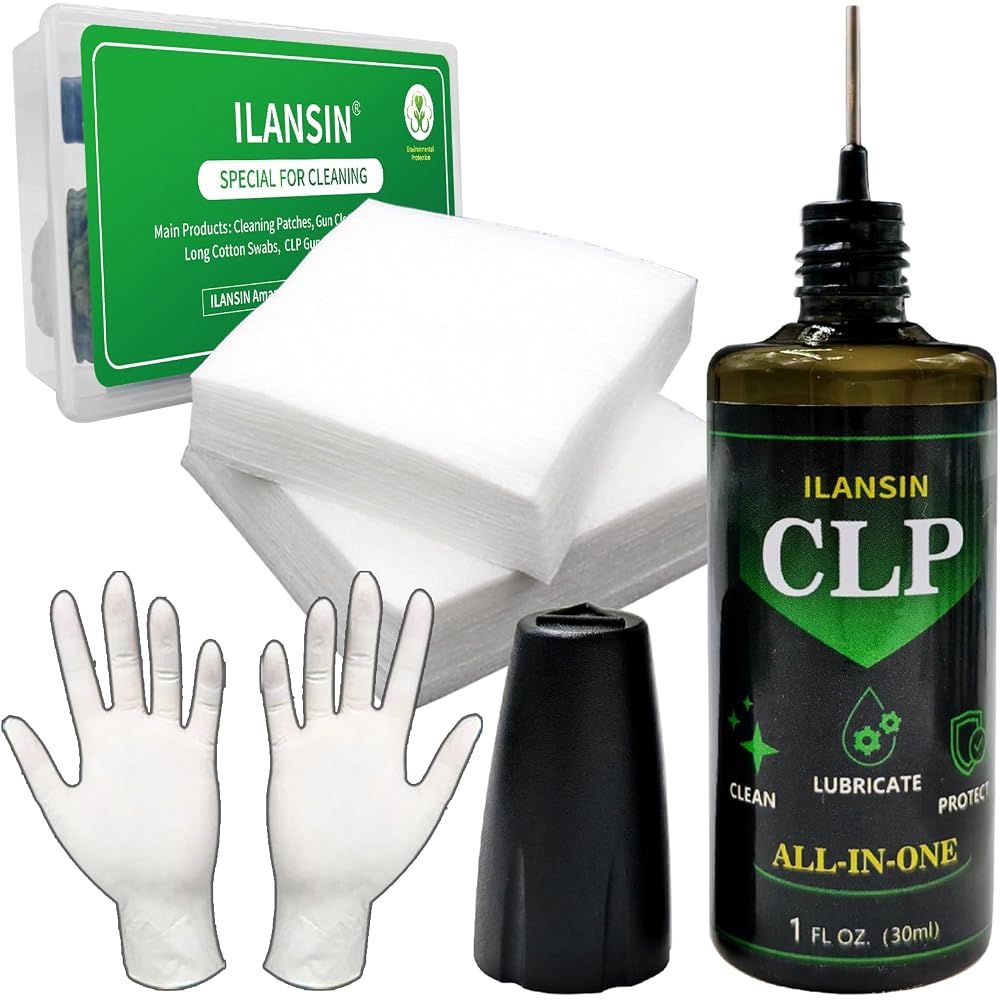
One drop at the manual’s lubrication points beats a soaked action — the needle tip makes restraint easy.
A schedule you can actually keep
Manufacturer guidance fits on an index card:
- After every range session: field strip, clean bore and breech face, lube lightly, wipe metal surfaces.
- Monthly for carry guns, even unfired: wipe down, clear lint, refresh lubricant.
- After rain, humidity or dust: clean and inspect before storage — see our practical cleaning schedule for the full breakdown.
- Every 1,000–3,000 rounds (or yearly): bench-level deep clean; leave detail stripping to an armorer.
- Before long storage: clean, thin oil film on steel, bore dry, stored away from ammunition.
None of it requires chemicals you cannot pronounce — a single CLP bottle covers clean, lube and protect in one pass, which is exactly why one-bottle formats keep winning shelf space.
What this means for wholesale buyers
Both cleaning levels run on the same consumables, which is why the reorder math works: a caliber-marked pistol basics kit sells the first visit, then 1,500-count bulk patches, needle-oiler CLP and lint-free cloths keep the account alive. Microfiber gun cloths in particular serve the monthly wipe-down crowd — the habit owners keep even when they skip everything else.

A lint-free microfiber cloth is the one tool the monthly wipe-down habit never skips.
If you are building a private-label line around this rhythm, our OEM/ODM program covers kit configuration, packaging and caliber markings from negotiable MOQs.
Stocking kits, patches and CLP for your market?
We manufacture the full line in our own plant since 1980 — kits, jags, patches, cloths, bore care and CLP — with OEM/private label from negotiable MOQs per SKU.
Request a Wholesale Quote →OEM / ODM →
Or order a single sample on Amazon to test the line before you commit volume.
Sources
- Ruger SR1911 Instruction Manual (PDF) — "Never disassemble your handgun beyond the field stripping process outlined in this manual": ruger-docs.s3.amazonaws.com
- SIG SAUER P220–P245 Pistol Owner’s Manual (PDF) — "Field stripping is quite sufficient... Further dismantling is a job for qualified gunsmiths and armorers only": SIG SAUER manual archive
- SIG SAUER Safety Warning & Operator’s Manual 10000236-01 — maintenance beyond user level to be performed by a certified SIG SAUER Armorer: sigsauer.com
- GLOCK care guidance (cleaning cadence: new/unfired, after every firing, monthly, after exposure; excess-lubrication caution) as summarized by Wing Tactical: wingtactical.com
- SIG SAUER P320 manual — clean and lubricate after approximately every 500 rounds (verified in our earlier 9mm cleaning guide research): sigsauer.com
Manufacturer guidance is quoted briefly and attributed above; schedule recommendations and B2B notes are our own summary as a cleaning-tools manufacturer. Always follow the owner's manual for your specific firearm.