
Gun Care Market Outlook 2027: What Buyers Should Watch
Assortment planning for 2027 starts now, and the raw numbers behind the gun care category look healthier than they have since the post-pandemic correction. Firearm sales have climbed for seven straight months, a niche product segment — suppressors — is doubling year over year, and third-party forecasts put cleaning supplies on a high-single-digit growth curve through 2032. None of that guarantees a good year for any particular distributor. But it does tell you where the replenishment demand will come from, and which SKUs deserve shelf space when the 2027 orders get written. Here is the data, and what it means for wholesale buyers.
Signal one: firearm sales are climbing again
The industry’s favorite barometer, the NSSF-adjusted NICS series, turned a corner this year. After January 2026 dipped 0.7%, every month since has beaten its prior-year figure — seven consecutive monthly increases through August. June was the standout: NSSF estimates 1,123,006 firearms were sold that month, up 11.7% from roughly 1,004,986 in June 2025. Even the seasonal peaks look solid; NSSF counted 530,156 background checks in the week around Black Friday 2025 and its president Joe Bartozzi described sales as "consistently strong" coming off recent peaks.
Why does that matter to a cleaning-products buyer? Because every new firearm in a customer’s hands eventually needs patches, brushes, oil and a mat to work on. Guns are the one-time sale; gun care is the annuity. A rising installed base is the clearest leading indicator our category has.
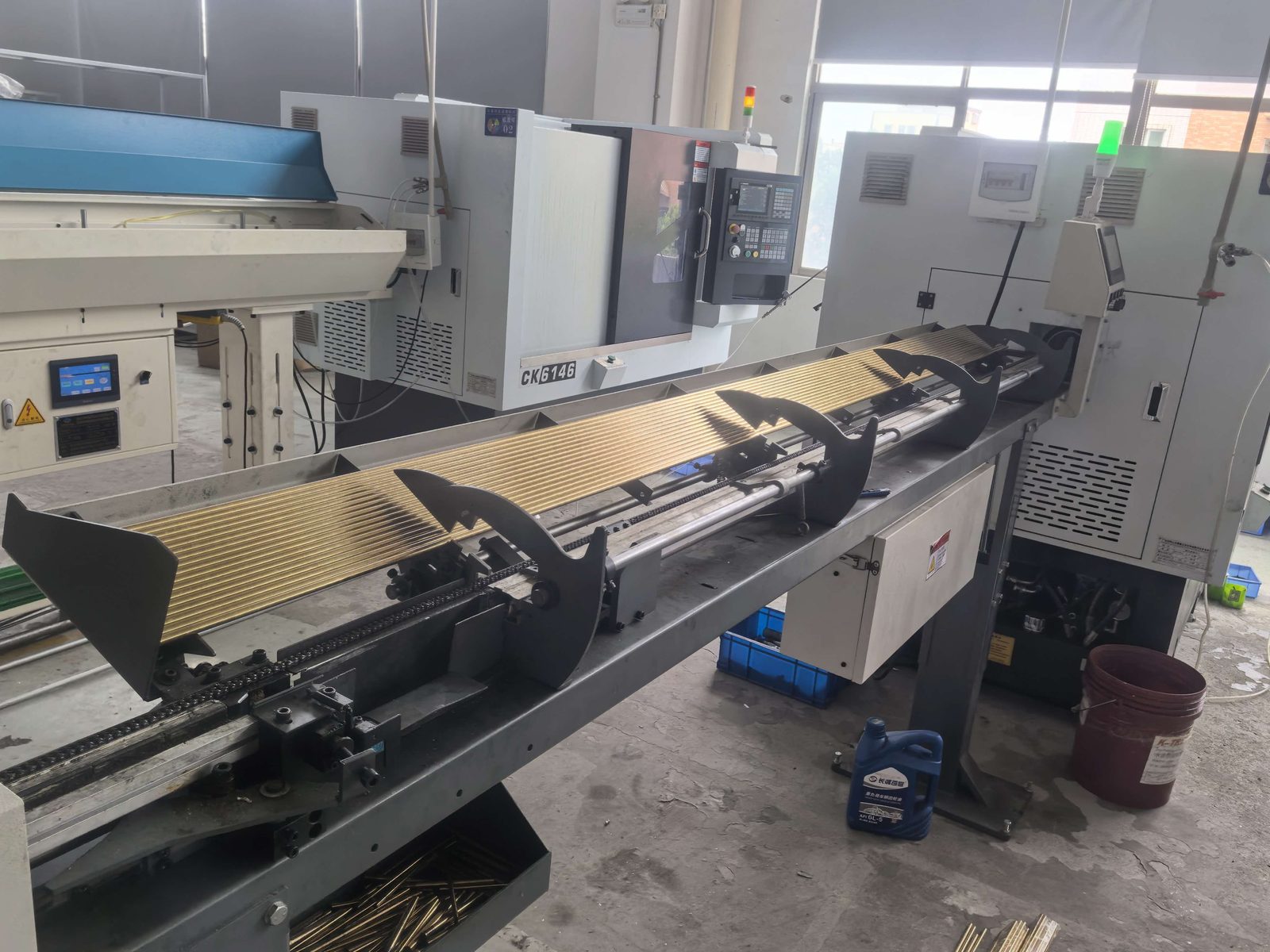
Rising demand shows up on the supply side first: brass rod feeding the jag and accessory lines.
Signal two: suppressors are the sleeper story
The strangest — and for bore care, most relevant — number of 2026 sits in the NFA column. NSSF counted 185,744 National Firearms Act transfers in August 2026 alone, a 201.6% jump from 61,594 a year earlier. The bulk of that growth is suppressors, which have moved from law-enforcement curiosity to mainstream range purchase.
A suppressor changes how a customer shoots: more rounds per session, more comfortable sessions, more carbon pushed back into the action and the can itself. That is a demand driver for bore cleaning frequency and for the consumables around it — swabs, patches and dedicated bore work. Distributors who anchor their 2027 accessory buy around high-frequency shooters, not just new-gun owners, will be aligned with where the volume actually is.
Signal three: the category math favors consumables
Third-party forecasts put hard numbers on the aisle. 360iResearch values the global gun cleaning supply market at $775.27 million in 2025, rising to $836.69 million in 2026 and compounding at 9.03% to roughly $1.42 billion by 2032. The kits sub-segment tracked by PW Consulting sits larger — about $1.12 billion in 2025, heading to $1.56 billion by 2032 at a 4.75% CAGR — with North America accounting for over half of revenue and hunters and sport shooters about half of end demand.
Read those two growth rates side by side and the takeaway is structural: the tools-and-kits half of the category grows steadily, but the consumables half grows faster. That is where repeat orders live, and it is why an accessories-heavy assortment beats a kit-heavy one for long-term account value.
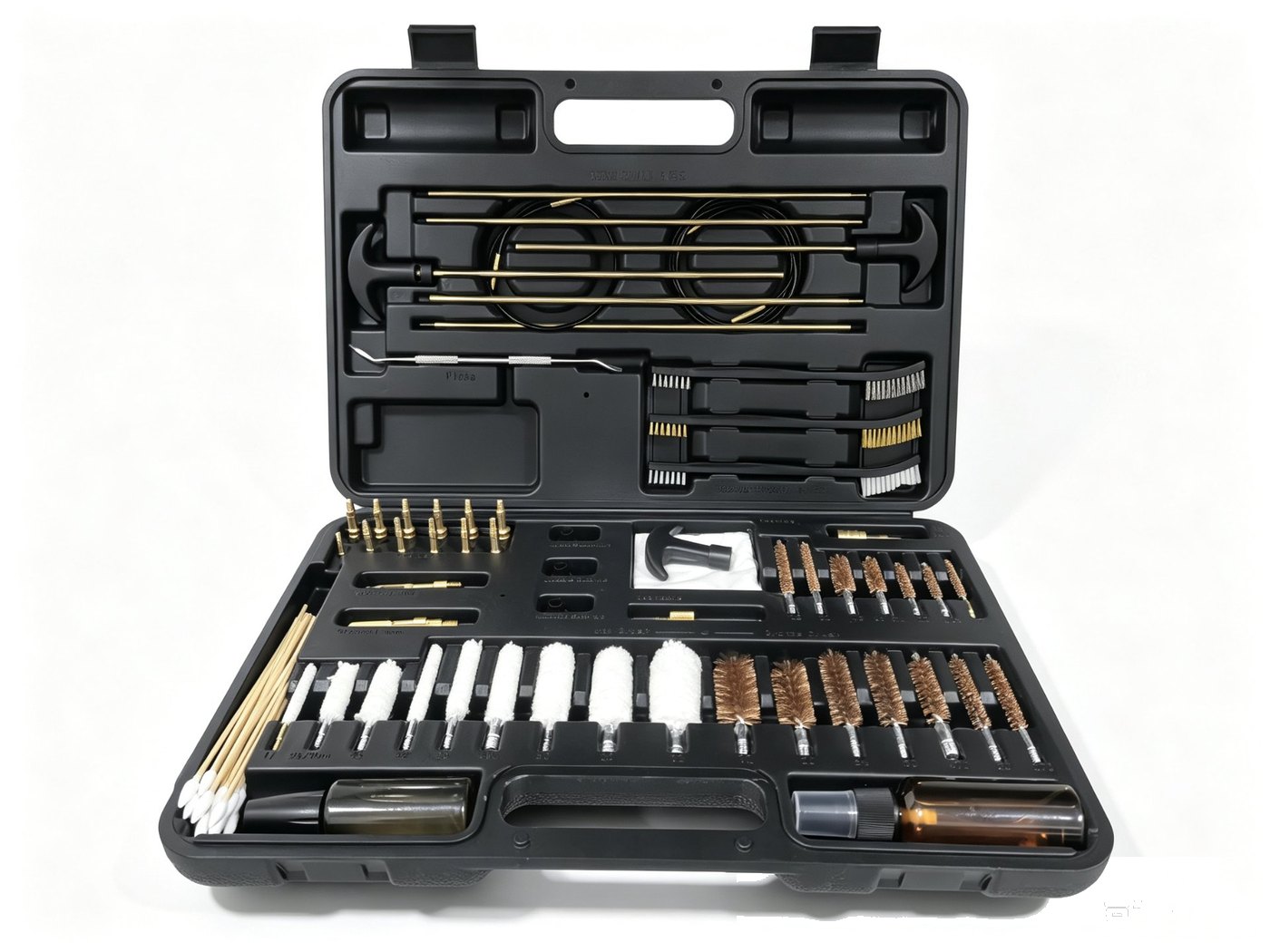
Universal kits are the largest single slice of the kits market — one box, many calibers, easier to stock.
Five things to watch when you build the 2027 order
- Universal kits keep winning the shelf. In the kits segment, universal multi-caliber kits already hold the largest share — about 41.6% of revenue in 2025 per PW Consulting’s forecast. A case that covers 9mm to .50 with one box beats a drawer of single-caliber SKUs, both for the retailer’s shelf and the distributor’s warehouse. Full-caliber component sets such as a 13-piece brass jag kit covering .17 to .50 ride this same logic at the accessory level.
- CLP consolidation continues. Buyers keep collapsing separate solvent and lubricant SKUs into one-bottle, three-job CLP formats — fewer boxes to ship, fewer compliance headaches, one demo that works for every counter. We covered the buying checklist in a dedicated CLP guide; for 2027 planning, assume the trend continues and give CLP the prime peg.
- Replenishment consumables drive the reorder. A kit sells once; patches, swabs and cloths sell all year. PW Consulting pegs the kits market growing about 4.75% a year, while the broader cleaning-supply category compounds faster (9.03% per 360iResearch) — the delta is consumables. Bulk lines like 1,500-count lint-free patches and needle-oiler CLP bottles are the SKUs that come back on the purchase order.
- Freight and lead time are part of the price. Tariff and shipping volatility in 2025–2026 pushed serious buyers to dual-source and to plan orders around production calendars instead of around panic. Our notes on lead-time and freight planning and a factory audit checklist cover the mechanics; the summary is that a stable supplier is now a pricing advantage, not just a quality one.
- New owners buy guided, simple products. Industry research keeps pointing at first-time owners as a growth engine, and they reach for kits that tell them what to do — clear caliber markings, short instructions, sensible tool counts. Caliber-specific boxes like a 9mm pistol kit or a 5.56/.223 rifle kit convert better with that audience than bare component bags.
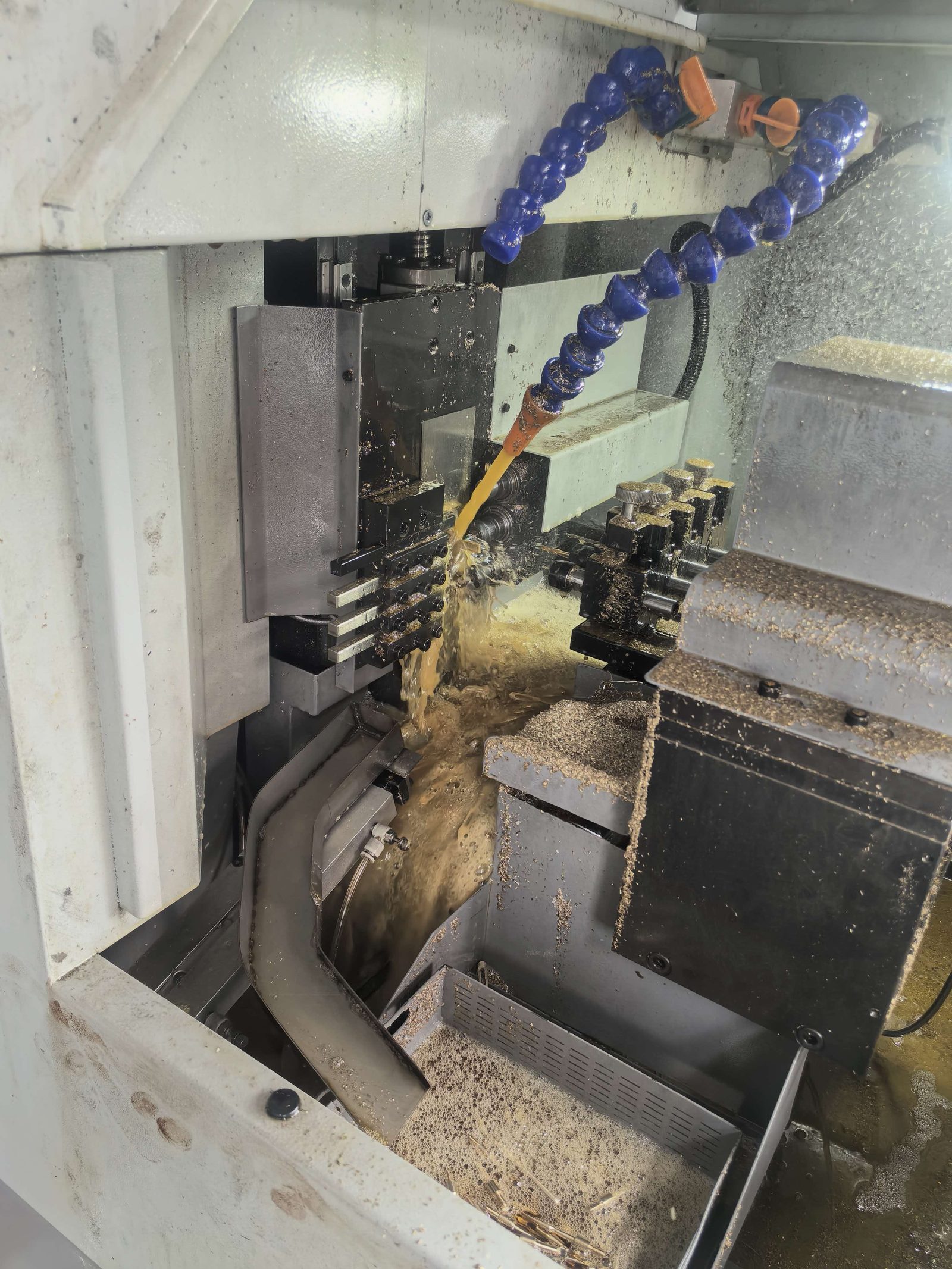
Behind the forecasts: in-house machining capacity is what keeps 2027 private-label slots and lead times predictable.
What this means for sourcing
Everything above points to one posture for 2027: anchor the plan in universal kits and caliber-specific entry kits, then build the reorder engine on consumables — patches, swabs, cloths, CLP formats and bore care. Our own lines cover the full span, from a 13-piece full-caliber brass jag set and three-caliber bore snake kit to CLP in spray-plus-needle formats, all made in-house and available for private label. If you are sequencing a 2027 program, the practical next steps are a customization conversation, a sample run, and an early look at the production calendar — the buyers who moved first this year locked their freight before the peak. Related reading: starting a gun care line without overstocking.
Planning your 2027 gun care assortment?
We manufacture the full consumables line in our own plant — kits, jags, patches, cloths, bore care and CLP — with OEM/private label from negotiable MOQs per SKU, and production slots that reward early bookings.
Wholesale & Distribution →OEM / ODM →
Or order a single sample to evaluate the line before you commit volume.
Sources
- NSSF — NICS Checks Top 530,000 for ‘Black Friday’ Week (530,156 checks; Joe Bartozzi on consistently strong sales): nssf.org
- American Rifleman, citing NSSF-adjusted NICS — Gun Sales Up for the 7th Month in a Row in 2026 (Aug 2026: 1,115,410, +2.2%; NFA transfers 185,744, +201.6%): americanrifleman.org
- American Rifleman, citing NSSF-adjusted NICS — June Gun Purchases up Nearly 12 Percent (June 2026: 1,123,006 vs 1,004,986): americanrifleman.org
- 360iResearch — Gun Cleaning Supply Market 2026-2032 ($775.27M 2025 → $836.69M 2026, CAGR 9.03% to $1,420.27M 2032): marketresearch.com
- PW Consulting — Worldwide Gun Cleaning Kits Market 2026 ($1.12B 2025 → $1.56B 2032, CAGR 4.75%; universal kits 41.6%; North America >50% of revenue): pmarketresearch.com
Market figures are quoted briefly and attributed above; forecasts belong to their publishers. Interpretations and assortment recommendations are our own summary as a cleaning-products manufacturer, offered for planning discussion rather than as investment advice.