
Gun Cleaning Patch Size Chart: Match Patch to Caliber the Right Way
Nothing on the cleaning bench is cheaper than a patch and nothing is misused more often. A patch that is too small slides down the bore touching only the tops of the lands, polishing the easy surfaces while powder fouling stays packed in the grooves. A patch that is too big wedges halfway down, jams the rod, and — on a bad day — has to be drilled out at a gunsmith. Ruger's Precision Rifle manual gives the whole problem two sentences: "Use correct size patches and brushes. Larger sizes will bind in the bore and can be very difficult to remove!" This chart gives you the working size ranges by caliber, the geometry behind them, and a fit test that settles borderline cases.
What the patch actually has to do
A cleaning patch is a gasket, not a wipe. Centered on a jag, it has to wrap the tip, fill the bore's land-to-land diameter, and still have spare fabric to bulge into the grooves — because that is where the fouling lives. SAAMI's published drawings show why guessing by caliber name fails: the 9mm Luger's bore measures .346 inch across the lands and .355 inch across the grooves, while the .223 Remington runs .219/.224 and the .308 Winchester .300/.308. Every one of those grooves is a few thousandths of an inch deeper than the lands, and a patch that never reaches the bottom of them simply is not cleaning.
That is also why published patch sizes run four to six times the groove diameter rather than anywhere near the bore itself. A 9mm bore is only .355 inch across, yet its circumference is about 1.1 inches — the patch has to cover that circumference and wrap around the jag holding it. Cut the numbers short and the fabric runs out before the seal does.
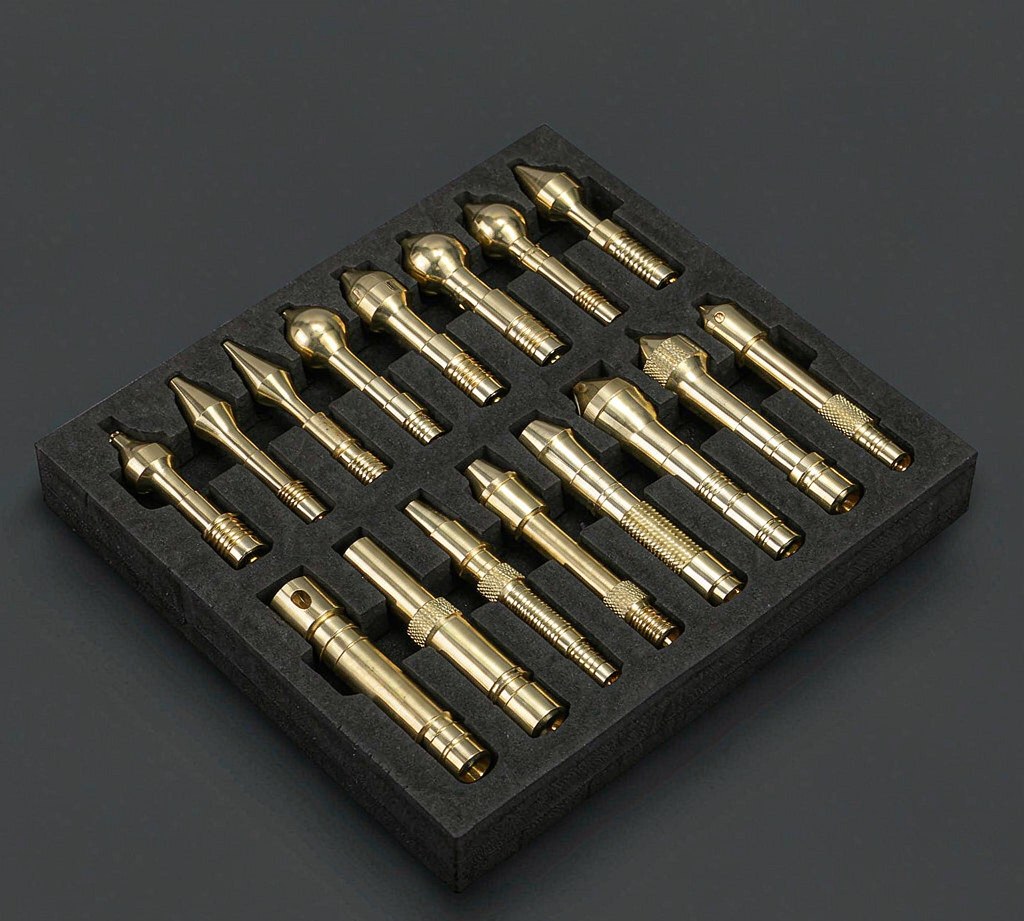
The patch is a gasket: centered on the jag, it must seal lands and grooves for the full stroke.
The patch size chart by caliber
Patch makers publish slightly different charts, so treat the ranges below as a starting point compiled from manufacturer specifications — Hoppe's, the oldest name in the category, groups its pre-cut patches at 1-1/8″ for .17 through .270, 1-1/2″ for .27 through .348, 2″ for .35 to .45 and small gauges, and 2-3/4″ for 16, 12 and 10 gauge. Hoppe's also cuts its smallest patches from thinner fabric so the square still folds cleanly in a .17 bore.
| Bore group | Typical chamberings | Square patch size (starting point) |
|---|---|---|
| .17 – .20 cal | .17 HMR, .204 Ruger | 3/4″ – 1 1/8″ (thinner fabric at the small end) |
| .22 – 6mm | .22 LR, .223 / 5.56, .243 | 1″ – 1 1/4″ |
| 6.5mm – .30 cal | 6.5 Creedmoor, .270, 7mm-08, .308, .30-06 | 1 1/4″ – 2″ |
| 9mm family | 9mm Luger, .38 Spl, .357 Mag | 1 3/4″ – 2 1/2″ |
| .40 – .45 cal | 10mm, .44 Mag, .45 ACP | 2″ – 3″ |
| Shotgun | .410, 28, 20, 16, 12, 10 ga | 2 1/2″ – 3″ |
.30 caliber is the borderline everyone argues about: some makers list 1-1/2″, others 2″, and both can work because rod rigidity, jag profile and fabric thickness shift the feel. The chart starts the pass; the fit test below finishes it.
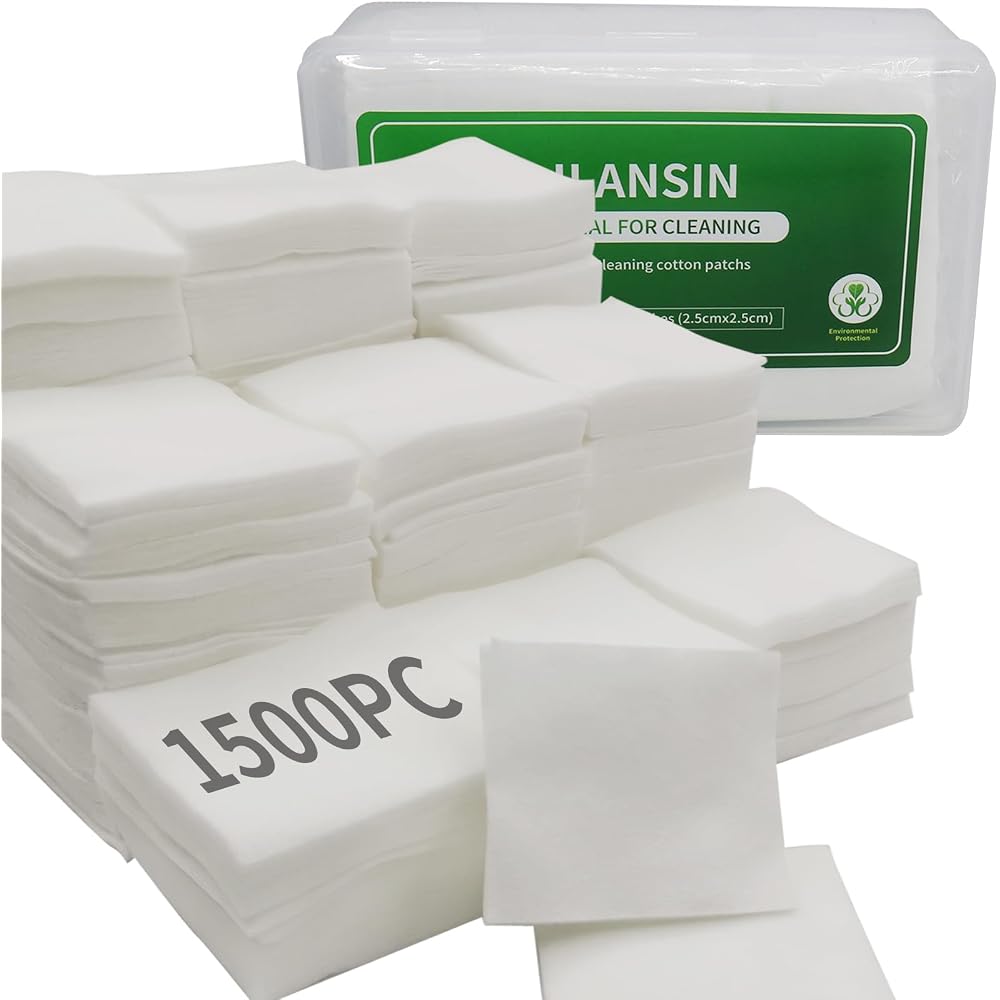
A 2x2″ square covers most handgun and .30-caliber rifle bores — the single most versatile patch size to stock.
Too big vs. too small
Oversize is the dangerous direction. Fabric bunches ahead of the jag, drag climbs, and the patch can bind tight enough that the rod will neither push nor pull. Ruger's revolver manual treats anything left in the bore as a live safety issue, warning that "any other material even partially obstructing the bore" can result in serious damage and injury. Undersize patches fail more quietly: the bore looks clean, the patches come out white, and the grooves keep their carbon — which is why a barrel cleaned with the wrong size can still throw groups.
The 60-second fit test
- Center the patch on the jag. An off-center patch lets the jag tip kiss the rifling on one side — the classic cause of crown scratches and uneven wipe. Seat it square before the tip enters the muzzle.
- Push from chamber to muzzle, one patch per pass. Change patches instead of stacking them. Layered patches raise drag sharply and are the usual way a tip snaps or a patch jams mid-bore.
- Read the patch when it exits. A correct fit comes out with an even, full-circumference solvent stripe. A clean ring on one side means the patch was too small or off-center; a patch you had to muscle through means size down.
- Never reverse a loaded rod mid-bore. If a patch binds, do not yank it back. Ruger's manual is explicit that an oversize patch "can be very difficult to remove" — work it forward and out the muzzle instead.
- Count the bore obstruction warning. Fabric left in a bore is a fired-round hazard. Ruger warns that "any other material even partially obstructing the bore" can cause serious damage and injury — always confirm the bore is clear before the next session.
- Match size to the tip, not just the caliber. A slotted tip folds the patch flat and needs a slightly larger square; a pointed brass jag grabs a centered patch and needs less. Size for the system you actually run.
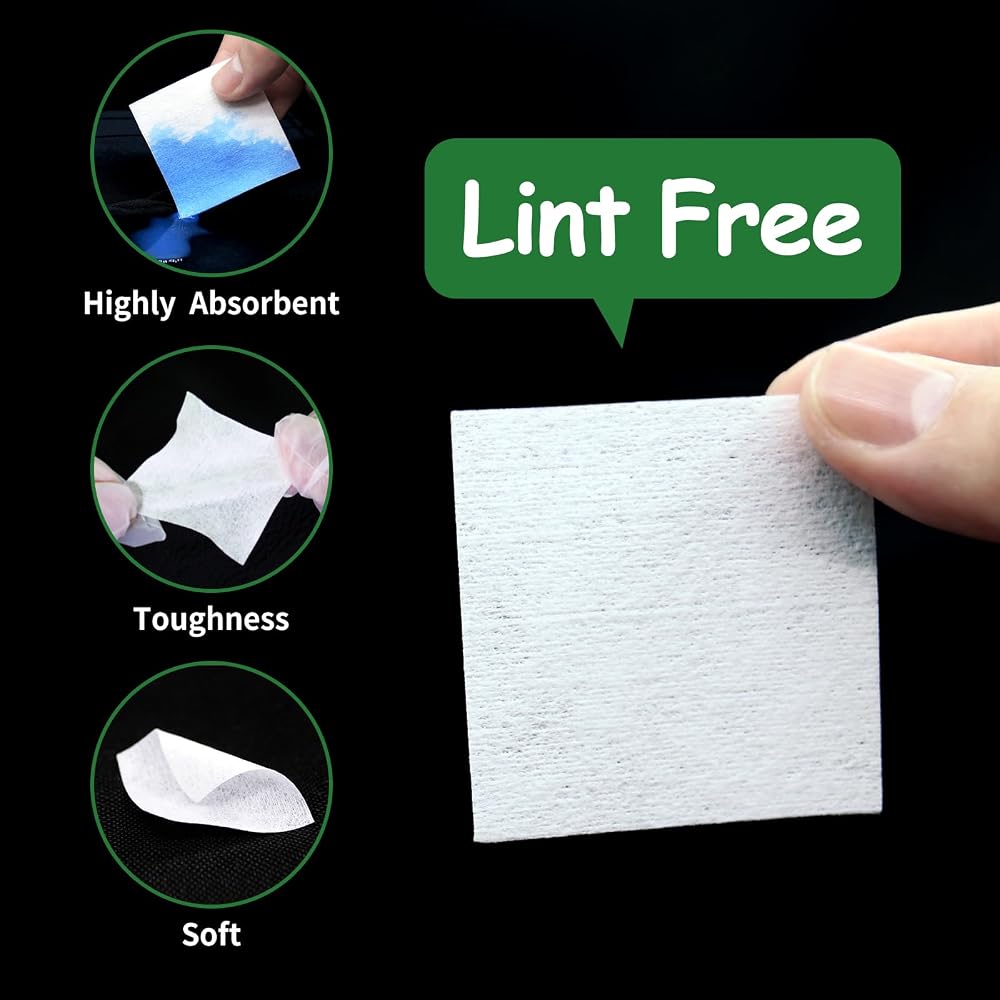
Fabric weight matters too: a thicker patch cleans in fewer passes but needs one size more clearance in tight bores.
Stocking note for dealers and kit builders
For retail and kit assembly, 2″ square is the workhorse — it serves 9mm/.38/.357 pistols, .30-caliber rifles (folded) and .40/.45 in a pinch — with 1 1/8″ covering the rimfire and .223 crowd. A two-size carton covers the majority of the market without tying up shelf space in six SKUs. Pair the patches with a caliber-matched solid brass jag set and the sizing logic is locked in at both ends.
Bulk buyers can find our field notes in the gun cleaning patches buying guide and the brass vs nylon jag comparison; for caliber-specific routines, see the 9mm pistol cleaning guide. Our own lines include 2,000-piece bulk 2×2 cotton patches, 1,500-piece lint-free patches and 1,000 thicker patches in a storage case — all cut from 100% cotton flannel, packed for counter sale or private label.
Sourcing patches, jags or a full consumables line?
Every product above is cut and packed in our own plant and sold wholesale — mixed-size cartons, private label from 500 pcs, and single-unit samples on Amazon if you want to test the fabric before you commit.
Wholesale & Distribution →OEM / ODM →
Or order a single sample to check the cotton first.
Sources
- Ruger — Instruction Manual for Ruger Precision Rifle (correct patch size; oversize patches bind in the bore): ruger-docs.s3.amazonaws.com (PDF)
- Ruger — Instruction Manual for Wrangler & Super Wrangler single-action revolvers (bore obstruction warning): ruger.com (PDF)
- SAAMI — ANSI/SAAMI Z299.3 Centerfire Pistol & Revolver standard, 9mm Luger cartridge & chamber drawing (bore .346″ / groove .355″): saami.org (PDF)
- SAAMI — cartridge & chamber drawings, .223 Remington (.219″ lands / .224″ grooves) and .308 Winchester (.300″ / .308″): saami.org
- Hoppe's — published pre-cut patch dimensions by caliber group (1-1/8″ / 1-1/2″ / 2″ / 2-3/4″), reproduced on the MidwayUSA product listing: midwayusa.com
Manufacturer guidance is quoted briefly and attributed above; size ranges and recommendations are our own summary as a cleaning-products manufacturer. Always follow the owner's manual for your specific firearm. Cleaning chemicals and lead residue require ventilation, gloves and eye protection — wash up before eating, drinking or handling food.