
Brass vs Nylon Jags: Which Tip Is Right for Your Rod?
Ask five shooters what ruins a barrel and somebody will blame the cleaning rod. The rod rarely is the problem — the tip on it is what touches the bore, and its two common materials, brass and nylon, behave very differently at the bench. Brass wipes a bore hard and lasts for years; nylon shrugs off the copper solvents that quietly eat brass. Match the tip to the job and you get both strengths.
What a jag actually does
A jag is a caliber-sized tip threaded onto the end of your cleaning rod — 8-32 UNC is the common thread on US-market pistol and rifle kits. You spear a patch onto it; the jag stretches the fabric over its stepped profile so it presses the whole bore — lands and grooves together — in one pass. Fit decides more than material does. Ruger's Precision Rifle manual is blunt about getting it wrong: "Use correct size patches and brushes. Larger sizes will bind in the bore and can be very difficult to remove!" A loose patch just polishes the middle of the bore; the right patch on the right jag wipes everything.
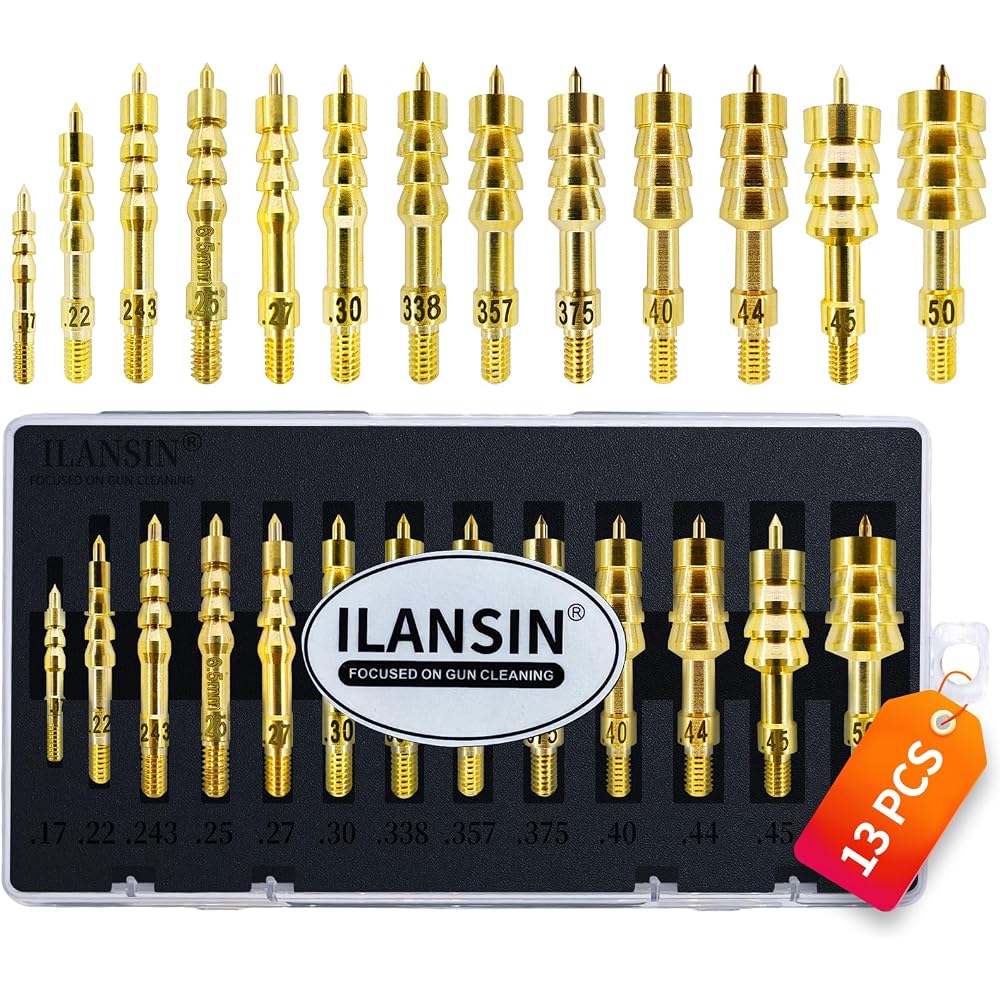
A full brass jag set: every shank is stamped with its caliber, and every tip shares the standard 8-32 thread.
Brass: the bench standard
Machined jags are typically cut from C360 free-cutting brass, which Diversified Bronze & Manufacturing lists at 55–78 on the Rockwell B scale — far softer than the 416R stainless and 4140 chrome-moly barrel steels at roughly 28–36 HRC. Standard conversion tables put the two ranges far apart, and that gap is the point: under contact pressure brass deforms before steel scratches, so a brass jag cannot score rifling or round off a crown. Brass also stays rigid, carrying the patch at full, even pressure from chamber to muzzle, and survives thousands of threading cycles.
Brass has one real weakness, and it is chemical, not mechanical. Ammonia-based copper removers are built to dissolve copper alloys — which is exactly what a brass jag is. Precision-barrel maker G.A. Precision puts it in writing: "Do not apply an aggressive copper remover, like Bore Tech or Sweets, on a bronze brush or brass jag." The solvent pits the tip, and the blue it leaves on your patch is jag copper, not bore copper — a false reading that drives pointless over-cleaning.
Nylon: the chemically inert option
Nylon is a polymer, so copper solvents have nothing in it to attack. Patch color stays honest: if it comes out blue after a nylon-tip pass, that copper came out of your barrel. G.A. Precision's official instructions take a clear position: "We recommend nylon brushes and non-brass jags for use with copper removers." The trade-off is stiffness. Nylon flexes where brass does not, so patch pressure runs a little softer on tight match bores, and a tip stacked with several patches can flex past its limit — one more reason for the one-patch-per-pass habit below. It is inexpensive, gentle on delicate bores, and the natural companion to every copper-remover bottle on your shelf.
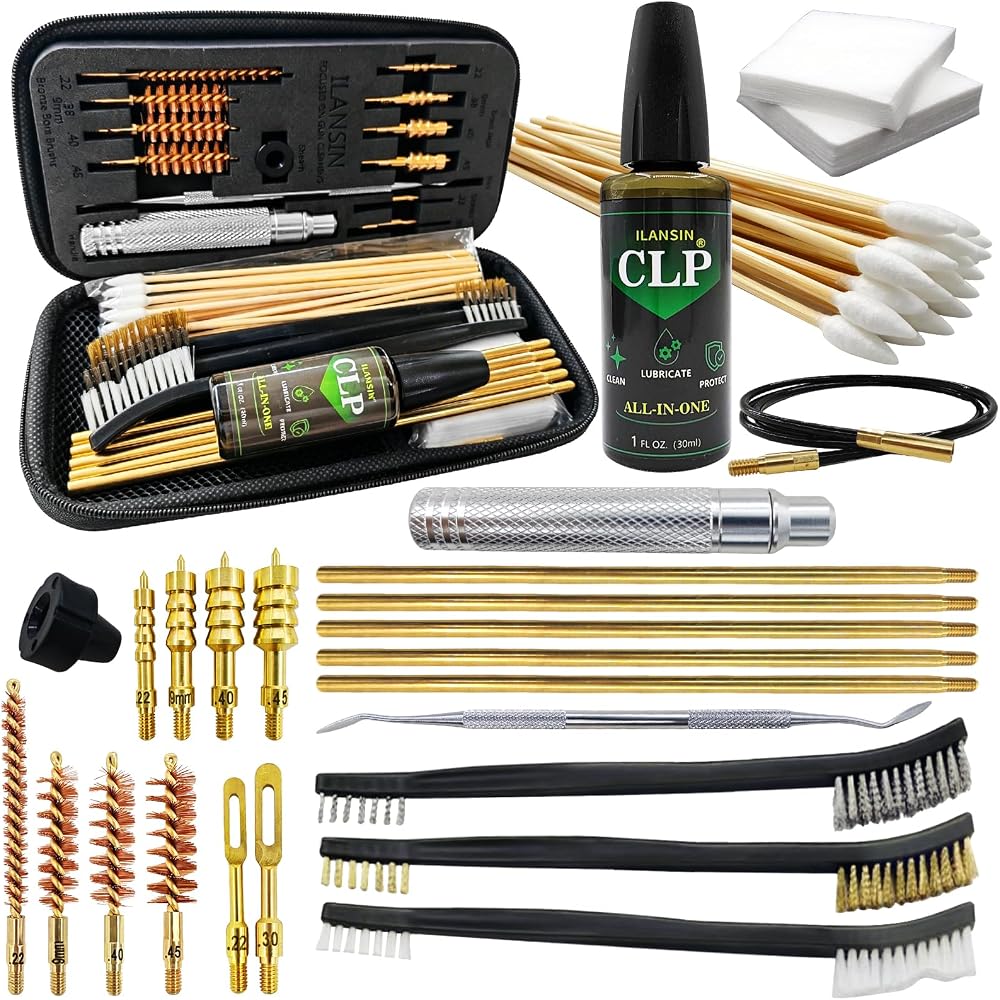
Two materials, two jobs: nylon detail brushes for solvent work, brass jags for the patch passes that wipe the bore.
And stainless steel? Never.
Steel-on-steel tips have no place in a bore. G.A. Precision's sheet is categorical: "Do not use a stainless steel brush or jag in your barrel under any circumstances." If a bargain kit ships one, retire the tip, keep the rod.
Side by side
| Property | Brass jag | Nylon jag |
|---|---|---|
| Scratch risk to rifling and crown | Effectively zero — brass deforms first | Zero — softer and more forgiving |
| Copper-solvent (ammonia) compatibility | Poor — solvent attacks brass, patches show false blue | Excellent — chemically inert |
| Rigidity and patch pressure | High — solid feel, consistent wipe | Lower — flexes under heavy patch loads |
| Best for | Daily carbon cleaning, range sessions | Copper-remover sessions, delicate bores |
The buying and usage checklist
- Match the caliber exactly. A jag should carry its caliber on the shank — .30, .357/9mm, .40, .45 — and match your bore; the patch wrapped over it does the final fitting.
- Check the thread before you buy. Most US-market rods and jags share the standard 8-32 UNC thread; shotgun rods and some imports differ — most orphan jags trace back to a thread mismatch.
- Use a one-piece rod and a bore guide. Jointed rods flex and bow, letting the tip scrape the throat and crown; a bore guide keeps everything centered.
- Push chamber to muzzle, never back mid-bore. Ruger's manual spells out the rule: "Insert rod from the chamber end of the barrel and push firmly so the patch or brush emerges from the muzzle. Do not reverse the rod when a brush or patch is being used before the brush or patch exits the muzzle – it may bind."
- One patch per pass. Layering patches over the tip raises drag sharply — the classic way a nylon tip snaps or a tip unscrews in the bore. Change patches, do not stack them.
- Match the tip to the solvent. Carbon solvent and CLP on a brass jag are fine. For copper-remover sessions, switch to a nylon or other non-brass tip, then go back to brass for the final dry patch.
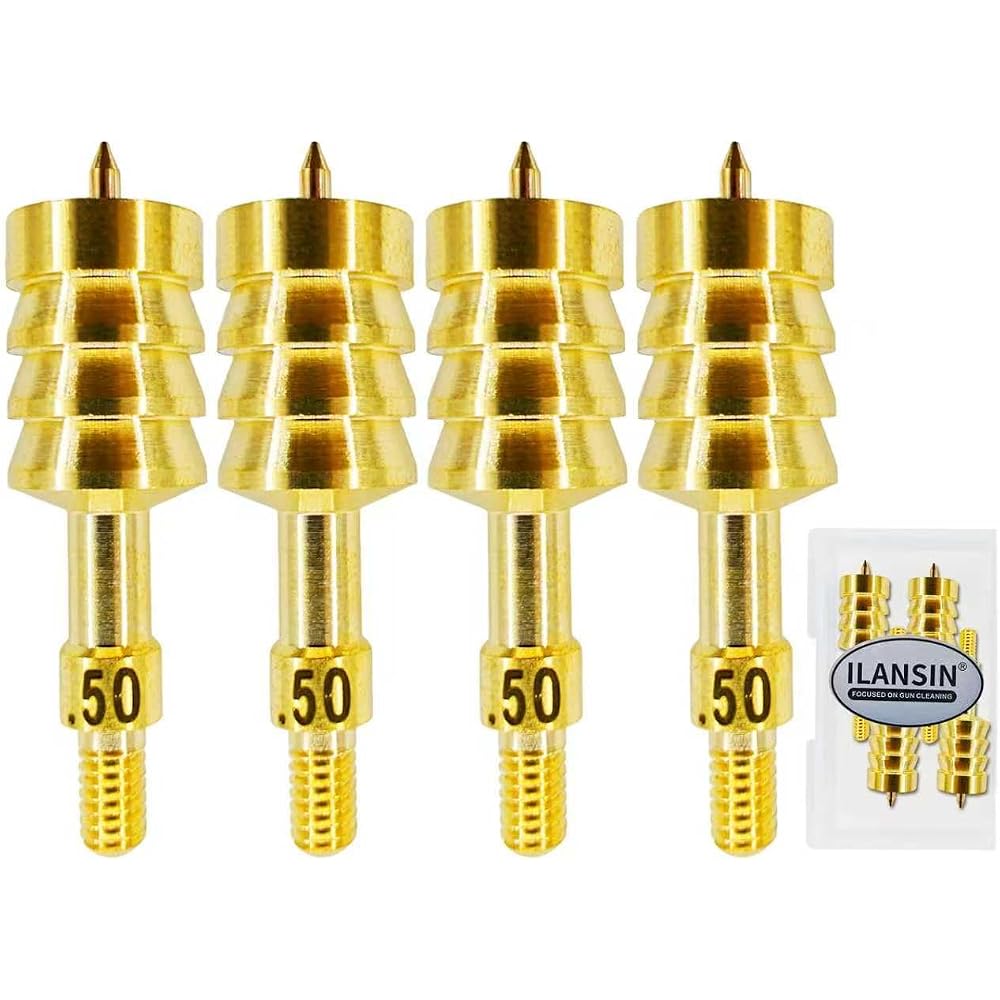
Caliber is stamped on the shank so the right tip is always on the rod.
So which tip belongs on your rod?
For everyday carbon cleaning — the routine most range shooters run — a brass jag is the better tool: rigid, durable, and it presses a patch into the rifling the way nylon cannot. Keep a nylon (non-brass) tip for copper-solvent sessions and you get both strengths without the false-blue readings. Retailers should stock both and let the solvent aisle decide.
Jags and matching consumables, factory direct
The 13-piece solid brass jag set covering .17 to .50 caliber puts every common rifle and pistol caliber on one 8-32 thread; the same range is available as a 13-pack bulk set for counter sales or a 4-piece .22 cal / 5.56mm set for AR owners. Our pistol kits ship the same way — brass jags on the rod, nylon detail brushes for solvent work, as in the photo above — and the Pistol Basics kit pairs rod, jags, mops and patches for the core handgun calibers. Bulk 100% cotton 2×2 patches complete the line. See also our 4PCS vs 10PCS vs 13PCS jag-set guide and the swabs, jags and brushes line-planning article.
Stocking jags, kits or building your own brand?
Every product above is machined and assembled on our own line and sold wholesale — mixed-caliber cartons, private label from 500 pcs, and single-unit samples on Amazon if you want to test before you commit.
Wholesale & Distribution →OEM / ODM →
Or order a single sample to check the machining first.
Sources
- G.A. Precision — Centerfire Barrel Break-In & Cleaning Instructions (copper removers vs brass jags/bronze brushes; nylon recommendation; stainless warning): gaprecision.net (PDF)
- Ruger — Instruction Manual for Ruger Precision Rifle (correct patch and brush sizes; chamber-to-muzzle rod direction): ruger-docs.s3.amazonaws.com (PDF)
- Diversified Bronze & Manufacturing — C36000 Free-Cutting Brass technical specifications (hardness 55–78 Rockwell B): diversifiedbronze.com
- Montana AR15 — AR15 Barrel FAQ (416R stainless barrel steel hardness 28–36 Rockwell C): montanaar15.com
Manufacturer guidance is quoted briefly and attributed above; comparisons and recommendations are our own summary as a cleaning-tools manufacturer. Always follow the owner's manual for your specific firearm and the label directions on any solvent. Cleaning chemicals and lead residue require ventilation, gloves and eye protection — wash up before eating, drinking or handling food.